Beijing Hutong Walking Tour: A Half-Day Route, Local Food & Tips for First-Time Visitors
If you’re exploring Beijing’s hutongs for the first time, my favorite half-day walk starts at Nanluoguxiang, turns into Mao’er Hutong, passes the Drum Tower and Yandai Xiejie, and finishes at Yinding Bridge and Houhai Lake. Set aside about 3–4 hours for a relaxed visit, including photographs and something to eat. The walk is approximately 3–4 km (2–2.5 miles) depending on the detours you take around the lake and side streets.

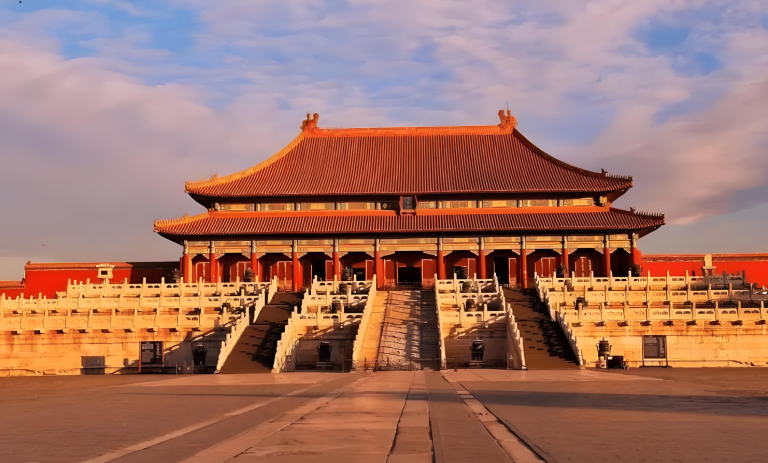
Beijing’s hutongs offer a different view of the capital from the Forbidden City or the Great Wall. Instead of huge imperial monuments, you’ll find narrow lanes, gray-brick walls, traditional courtyard homes, bicycles, small shops, and neighbors going about their day.
From a Chinese local’s perspective, I think a first trip to Beijing should include both sides of the city: its famous royal architecture and its much more personal neighborhood streets.
But not every hutong is the same. Some are lively shopping streets; others are residential lanes where families still live. This guide explains where to walk, what to eat, how much to budget, and which tourist traps to avoid.
1. Are Beijing’s Hutongs Worth Visiting?
Yes—especially if you want to see something of Beijing’s traditional urban life beyond the big-ticket sights.
A hutong (胡同) is a narrow lane, and many hutongs sit between traditional courtyard residences known as siheyuan (四合院). A typical siheyuan has rooms arranged around an enclosed courtyard. These homes reflect centuries of family life and urban design in northern China.
As you walk, look for carved stone door blocks, old tiled roofs, painted gates, and the textures of gray brick. Some courtyards now house cafés or guesthouses, while many remain private homes.
The most important local etiquette tip: a hutong is a living neighborhood, not an open-air museum. Admire the streets and photograph public spaces, but don’t walk through a residential gateway just because it looks beautiful. Never block someone’s front door or photograph residents at close range without permission.
Which hutong area should you visit first?
For newcomers, I recommend Nanluoguxiang, Mao’er Hutong, the Drum Tower, and Shichahai. These places are close enough to combine in one outing and offer a useful contrast between commercial streets, quieter residential lanes, a historic landmark, and lakeside scenery.
It’s also much easier to navigate than setting out alone in search of remote, unfamiliar hutongs.
2. The Best Half-Day Beijing Hutong Walking Route
Route: Nanluoguxiang Metro Station → Nanluoguxiang → Mao’er Hutong → Beijing Drum Tower → Yandai Xiejie → Yinding Bridge → Houhai Lake.
I’d start in the early afternoon. You’ll see the street life in daylight and, if the weather cooperates, enjoy the lakeside as the light softens toward evening.
| Suggested time | Stop | What to do |
|---|---|---|
| 1:00–1:45 p.m. | Nanluoguxiang | Browse the lane and try a snack |
| 1:45–2:20 p.m. | Mao’er Hutong | Notice old courtyard gates and everyday street life |
| 2:20–3:20 p.m. | Drum Tower area | Explore the landmark and grab local food |
| 3:20–4:00 p.m. | Yandai Xiejie | Browse historic shops and teahouses |
| 4:00–5:00 p.m. | Yinding Bridge and Houhai | Relax beside the lake and take photographs |
The times are flexible. Add time for restaurant queues, an optional Drum Tower visit, or a longer walk by the water.
Stop 1: Nanluoguxiang (南锣鼓巷) — The Famous Hutong Shopping Street

Time to allow: 30–45 minutes
Getting there: Beijing Subway Lines 6 or 8, Nanluoguxiang Station (南锣鼓巷站)
Nanluoguxiang is one of Beijing’s best-known old-city streets. Its north–south main lane runs for roughly 786 meters (0.5 miles), with a network of smaller hutongs branching away on either side.
It’s an easy introduction to old Beijing’s street layout, but here’s something I’d rather tell you before you arrive: Nanluoguxiang is now a very commercial tourist street.
You’ll find bubble-tea shops, cafés, souvenir stores, and snack counters. It’s fun to experience the energy, but I wouldn’t spend your entire afternoon shopping on the main lane if your goal is to understand ordinary neighborhood life.
Walk for a while, then turn into one of the side hutongs. The change of atmosphere can be striking.
Stop 2: Mao’er Hutong (帽儿胡同) — Everyday Beijing Behind the Shopfronts

Time to allow: 20–35 minutes
From Nanluoguxiang, turn west into Mao’er Hutong. This east–west lane leads toward the Di’anmen Outer Street area and makes a natural link to the Drum Tower.
Compared with the busy Nanluoguxiang shopping street, Mao’er Hutong offers more of the traditional residential atmosphere people imagine when they think of old Beijing.
Look out for gray-brick courtyard walls, decorated doorways, and the small details of older houses. Some properties are connected with notable figures from late imperial and early modern Beijing, though historic gates don’t necessarily mean the interiors are open to visitors.
My advice: Enjoy the street from public space. If a resident is entering or leaving a courtyard, give them room. Avoid lingering directly in front of someone’s home to take photos.
Stop 3: Beijing Drum Tower (北京鼓楼) — How the Old Capital Kept Time

Time to allow: 30–60 minutes
Continue toward Beijing Drum Tower, near Di’anmen Outer Street. Along with the Bell Tower just to its north, it forms one of the key historic landmarks on Beijing’s Central Axis.
The towers once helped mark time in the imperial city. If you enjoy history or architecture, you can buy a ticket to climb the Drum Tower, where the views over surrounding hutong rooftops help reveal the old city’s layout.
There are scheduled drum performances, too, but times can change. If you’re mainly interested in the architecture, you can simply admire the exterior without buying a ticket.
Important for late-October visitors: As of October 26, 2026, the official off-season opening hours are 9:30 a.m.–4:30 p.m. Joint tickets stop being sold at 3:30 p.m., while individual tower tickets stop at 4:00 p.m. The Drum Tower is ¥20, the Bell Tower ¥10, and the standard joint ticket ¥30. For a drum performance, check the updated daily schedule before visiting.
Official visitor information: Beijing Bell and Drum Towers.
If you plan to go inside, aim to reach the ticket counter before 3:30 p.m. rather than relying on the last possible admission time. The stairs are steep, so this may not suit everyone.
The area around the Drum Tower is also a convenient place to pause for an old Beijing snack.
Stop 4: Yandai Xiejie (烟袋斜街) — A Short Historic Shopping Lane

Time to allow: 20–40 minutes
From the Drum Tower area, head south and turn west onto Yandai Xiejie. This short, diagonally aligned lane leads toward Shichahai.
Its unusual shape sets it apart from Beijing’s more regular street grid. Historically, the area was associated with shops selling tobacco pipes, antiques, and other goods.
Today you’ll see tea shops, souvenirs, cafés, and cultural gifts. If you’re looking for small keepsakes, it’s a pleasant place to browse, but you don’t have to buy anything to enjoy the atmosphere.
Check prices before purchasing expensive tea, handmade-looking souvenirs, or items advertised as antiques.
Stop 5: Yinding Bridge and Houhai (银锭桥 / 后海) — End Your Walk by the Water

Time to allow: 45–60 minutes, or longer if you want a lakeside break
At the western end of Yandai Xiejie, you’ll reach the Shichahai (什刹海) area, made up of lakes including Qianhai, Houhai, and Xihai.
Yinding Bridge (银锭桥) is a classic stopping point for photos. From the bridge, you can enjoy the water, traditional buildings, willow trees, and the surrounding neighborhood.
Continue along the shore of Houhai Lake (后海). You’ll find teahouses, cafés, restaurants, and bars. It can be a lovely place to unwind after walking through the hutongs.
The atmosphere changes after dark, when the lakeside bar scene becomes more active. If you prefer quiet streets, arrive earlier in the afternoon.
To leave, use Amap or Apple Maps to find Shichahai Station (什刹海站) on Subway Line 8. The walk to the station depends on how far you explore around the lake.
For practical navigation tips—including searching Chinese place names and choosing the right metro exit—see our guide to the best maps for traveling in China.
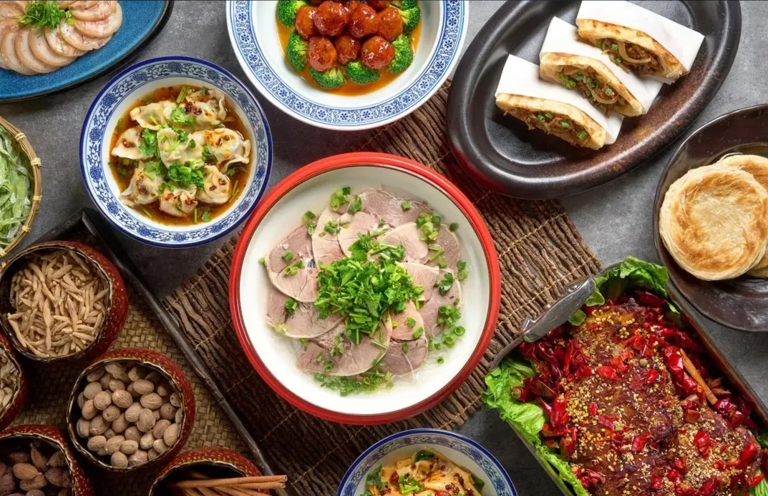
3. What to Eat on a Beijing Hutong Walk
A hutong walk is a great excuse to try traditional Beijing food. Some flavors are immediately familiar; others, especially fermented drinks and organ-meat dishes, may surprise you.
1. Beijing Zhajiangmian (老北京炸酱面) — Noodles with Savory Soybean Sauce

Typical price: ¥20–40 per bowl
Zhajiangmian is one of Beijing’s signature noodle dishes. The noodles are served with a thick, savory sauce—often made with pork and fermented soybean paste—plus fresh vegetable toppings such as cucumber.
Mix the sauce and vegetables into the noodles before eating. If you’re unsure how salty the sauce is, start with a little and add more after tasting.
Suggested restaurant: Fangzhuanchang No. 69 Zhajiangmian (方砖厂69号炸酱面)
Address: No. 1 Fangzhuanchang Hutong, Dongcheng District (北京市东城区方砖厂胡同1号).
Here’s a detail that confuses visitors: although the brand name contains “No. 69,” the well-known original hutong shop is listed at No. 1 Fangzhuanchang Hutong. It’s near the northern end of Nanluoguxiang, but you’ll need to make a short detour from the main route if you specifically want to eat there.
This restaurant can attract queues, especially at mealtimes. Check its current hours and reviews before making a special trip.
2. Chao Gan (炒肝) — A Traditional Beijing Pork Offal Dish

Typical price: ¥15–30 per serving
Despite a name that is sometimes translated as “fried liver,” chao gan isn’t a plate of stir-fried liver.
It’s a thick, garlicky, savory dish traditionally made with pork liver and pork intestines, thickened into a rich sauce or soup-like consistency. It’s often eaten with small steamed buns.
The texture and ingredients won’t appeal to everyone. If you don’t eat pork or organ meats, skip it or ask about another item.
Suggested restaurant: Yaoji Chaogan, Drum Tower Branch (姚记炒肝店·鼓楼店)
Address: No. 311 Gulou East Street, Dongcheng District (北京市东城区鼓楼东大街311号).
This branch is near the Drum Tower, so it’s convenient for the walking route. It’s also a practical place to try several traditional breakfast foods without leaving the area.
3. Wandouhuang (豌豆黄) and Lüdagun (驴打滚) — Traditional Beijing Sweets

Typical price: around ¥10–25 per portion
If you prefer something sweet, try wandouhuang, a soft, delicately flavored yellow pea cake.
Another traditional sweet is lüdagun, a sticky rice-based roll commonly filled with sweet bean paste and coated in soybean flour.
Its Chinese name literally suggests a “donkey rolling around,” but don’t worry—it doesn’t contain donkey meat.
As always, ask about ingredients if you have allergies. Traditional sweets can contain soybeans, peanuts, sesame, or other allergens depending on the recipe.
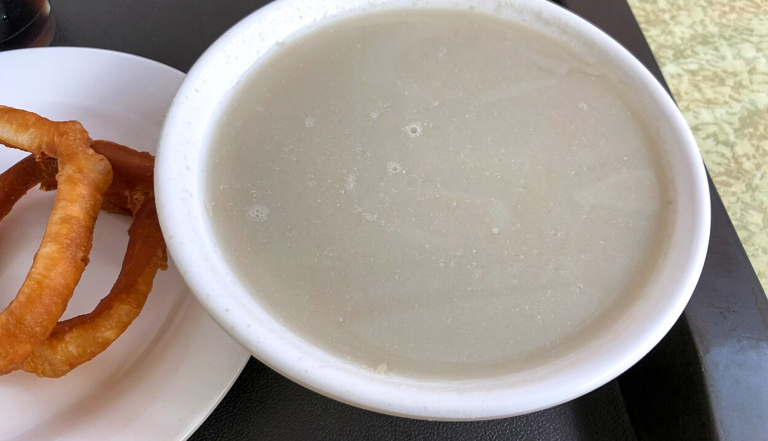
4. Douzhi (豆汁) and Jiaoquan (焦圈) — An Acquired Taste
Douzhi is an intensely flavored, fermented drink made from the liquid produced during mung-bean starch preparation. Some Beijing locals enjoy it with jiaoquan, a crispy fried ring.
The sour, fermented aroma is quite distinctive—and many first-time visitors don’t like it.
If you’re curious, buy the smallest serving available. There’s no need to finish a large bowl just to say you tried it.
4. How Much Does a Half-Day Hutong Walk Cost?
Walking through the public hutong streets is free. You don’t need an admission ticket for Nanluoguxiang, Mao’er Hutong, Yandai Xiejie, or the public lakeside paths around Shichahai.
Most of your spending will be on food, drinks, optional tower admission, or souvenirs.
| Expense | Rough cost per person |
|---|---|
| Public hutong streets | Free |
| Round-trip subway travel | ¥6–12 |
| Zhajiangmian or local snacks | ¥25–50 |
| Dessert, tea, or other drinks | ¥20–50 |
| Drum Tower admission (optional) | ¥20 |
| Souvenirs or licensed pedicab tour | Optional; confirm prices first |
For a straightforward half-day walk with a simple meal and a few snacks, ¥80–150 per person is a reasonable starting budget. A lakeside bar visit, shopping, or a private tour can make it more expensive.
Most small food shops accept Alipay or WeChat Pay, but I recommend carrying some cash as backup. If you haven’t set up your payment apps, read our guide to paying in China with Alipay, WeChat Pay, foreign cards, and cash.
5. Six Common Beijing Hutong Tourist Traps to Avoid
1. Believing you need an expensive ticket to enter a hutong
Public lanes such as Nanluoguxiang and Yandai Xiejie are generally free to walk through. If someone offers a costly mandatory “hutong entrance ticket,” verify the claim first. Tickets for the Drum Tower, guided visits, museums, or a pedicab ride are separate and optional.
2. Getting into a pedicab without agreeing on the price
Some operators around Shichahai offer pedicab hutong tours. They may be enjoyable if you want to sit rather than walk, but don’t simply climb aboard.
Choose properly licensed operators and confirm whether the fare is per person or per vehicle, the exact route, duration, whether a guide is included, and any extra stops or fees.
If the price isn’t clear, walking is a perfectly good alternative.
3. Buying food or gifts without a clearly displayed price
Tourist streets sell snacks, dried fruit, pastries, tea, and souvenir boxes. Ask whether an item is priced per piece, per serving, or by weight. Confirm the total before paying, particularly for loose sweets and gift packs.
4. Treating private courtyards as public attractions
A beautiful old gate doesn’t necessarily lead to a museum. Many siheyuan remain private residences. Respect “No Entry” signs and avoid photographing residents through doorways.
5. Waiting all afternoon for one viral restaurant
Some well-known noodle shops have long queues. They can be worth a stop, but Beijing has more than one good bowl of zhajiangmian. If the wait is too long, search for a nearby restaurant using its Chinese name in Amap and check current reviews.
6. Sitting at a lakeside café or bar without checking charges
At Houhai, ask about drink prices, minimum spending requirements, and any charges for live music or other services before you order or sit down for a lengthy visit.
6. Useful Chinese Place Names for Your Hutong Walk
You don’t need to speak Mandarin to follow this route, but saving the Chinese names makes navigation much easier.
| English place name | Chinese name |
|---|---|
| Nanluoguxiang | 南锣鼓巷 |
| Mao’er Hutong | 帽儿胡同 |
| Beijing Drum Tower | 北京鼓楼 |
| Yandai Xiejie | 烟袋斜街 |
| Yinding Bridge | 银锭桥 |
| Houhai | 后海 |
| Shichahai Metro Station | 什刹海地铁站 |
Use Amap (高德地图) or Apple Maps to search. If English results seem ambiguous, paste the Chinese characters instead.
For paying at snack shops, Alipay and WeChat Pay are widely used, and a small amount of cash can be handy. For connectivity, see our China internet and eSIM guide—mobile data is particularly useful when navigating narrow lanes.
Walking safety: Hutongs may be narrow, but some still have bicycles, electric scooters, and local vehicles moving through them. Step aside before taking photos, and don’t walk while looking continuously at your phone.
7. When Is the Best Time to Explore Beijing’s Hutongs?
Spring and autumn are my favorite seasons for a walking route like this.
Spring brings milder weather, although Beijing can occasionally be windy or dusty. Autumn often has comfortable temperatures and pleasant light for street photography.
Summer afternoons can be hot. Start a little later if you want to finish at Houhai around sunset, but expect more people in the main tourist lanes.
Winter is cold, and the wind by the lakes can feel sharp. Dress warmly and allow extra time for indoor breaks.
For fewer crowds, try a regular weekday morning. For evening lakeside atmosphere, start in the afternoon and take your time.
The busy nightlife around Nanluoguxiang or Houhai and the quiet residential character of Mao’er Hutong are very different experiences. Seeing both is what makes this walk so rewarding.
Final Thoughts: The Best Hutong Experience Isn’t About Shopping
If this is your first visit to Beijing, don’t spend all your time at the Forbidden City, the Great Wall, and other grand landmarks.
A few hours in the hutongs can show you another side of the capital—one shaped by narrow streets, old courtyard homes, everyday routines, and local food.
Walk from lively Nanluoguxiang into the quieter side lanes, pass the historic Drum Tower, browse Yandai Xiejie, and finish by the water at Houhai.
The real attraction isn’t the number of trendy shops you visit. It’s the chance to notice traces of traditional Beijing life in a rapidly changing modern city.
You don’t need an expensive tour package. Walk slowly, respect the neighborhood, and enjoy a bowl of noodles along the way. That’s already a very Beijing kind of afternoon.
Updated October 2026. Hours, performance schedules, food prices, restaurant openings, and transport arrangements can change. Check official notices and current local map listings before your visit.

2 Comments