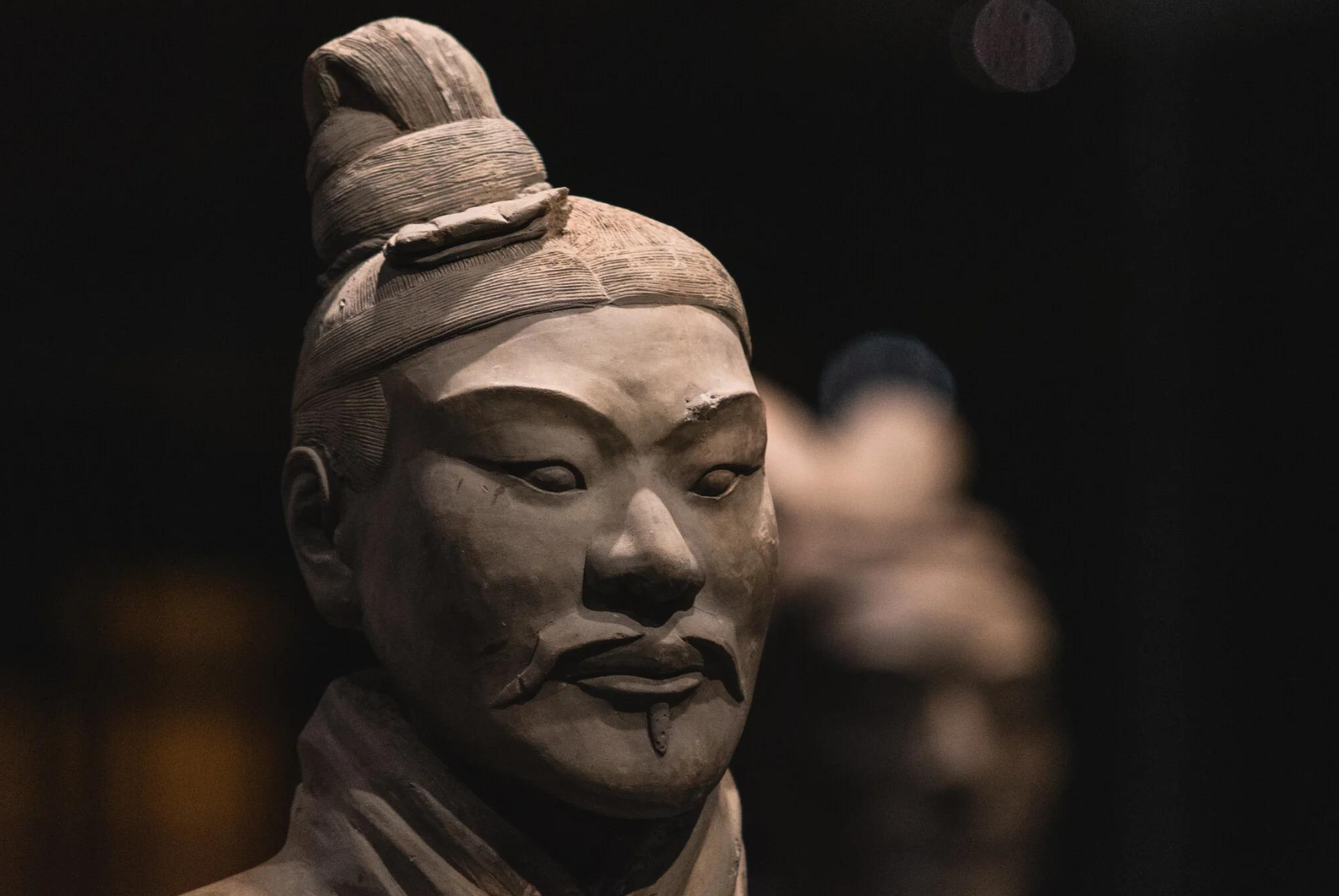
How to Visit the Terracotta Army in Xi’an: Tickets, Passport Booking, Transport & Visiting Tips

Visiting the Terracotta Army for the first time? Book your ticket in advance, bring your original passport, leave central Xi’an in the morning, and set aside at least half a day.
A standard adult ticket costs ¥120 and covers both the Terracotta Army Museum and the nearby Lishan Garden archaeological park. Allow 2–3 hours for the warrior pits, or roughly 6–8 hours in total if you also visit Lishan Garden and travel to and from central Xi’an.
The Terracotta Army is in Lintong District, about 40 km (25 miles) from central Xi’an.
It’s one of China’s most remarkable historical sights, but a few practical details can puzzle first-time international visitors.
Why does one ticket cover two separate places? Can you book with a passport? Is the metro or a taxi easier? And what’s different about Pits 1, 2, and 3?
I’ll walk you through it from a local Chinese travel perspective, so you can spend more time appreciating this extraordinary archaeological site and less time figuring out the logistics.
1. Is the Terracotta Army Worth Visiting?
Absolutely—if you’re visiting Xi’an for the first time, I’d give the Terracotta Army at least half a day, and preferably longer if you enjoy history.
What exactly is the Terracotta Army?
Known in English as the Terracotta Army or Terracotta Warriors, these life-size clay figures were created as part of the vast tomb complex of Qin Shi Huang Mausoleum.
In 221 BCE, Qin Shi Huang unified the competing states under the Qin dynasty. The emperor’s enormous burial complex included pottery soldiers, horses, chariots, and other objects representing the power and organization of his empire in the afterlife.
The figures aren’t simply decorative statues. Many were arranged in military formations, reflecting different roles in an ancient army.
Farmers digging a well discovered fragments in 1974, setting off one of the world’s most important archaeological excavations.
The mausoleum complex became a UNESCO World Heritage Site in 1987.
What makes the site so impressive?

For me, it’s the combination of scale and detail.
From the viewing platform overlooking Pit 1, you’ll see lines of human-size warriors standing in long excavation trenches. Their armor, hairstyles, faces, and postures show striking variations.
Another surprising detail: the warriors weren’t originally the gray-brown color you see today.
Many once had vividly painted surfaces. Much of that pigment has been lost or damaged over time and after excavation, which is one reason modern archaeological work proceeds so carefully.
Digging an object out of the ground is only the beginning of protecting it.
Who will enjoy it most?
If you like world history, archaeology, ancient warfare, or Chinese culture, this is one of Xi’an’s essential sights.
Even if you don’t know much about the Qin dynasty, seeing the figures in person gives you a vivid sense of the craftsmanship and organization involved.
If you mainly enjoy hiking and outdoor scenery, however, adjust your expectations.
The main experience is inside large archaeological exhibition halls rather than wandering around an ancient city outdoors.
My advice: Don’t skip the Terracotta Army on a first visit, but read a little about Qin Shi Huang before you go. Even 20 minutes of background makes the displays much more meaningful.
2. How Do Foreign Visitors Book Terracotta Army Tickets?
International visitors can use passport details to book through the museum’s official website or official WeChat accounts. You do not need a Chinese resident ID card.
How much are tickets?
| Ticket type | Reference price |
|---|---|
| Standard adult | ¥120 |
| Eligible student | ¥60 |
| Eligible free-admission visitor | Free, but advance reservation is still required |
Student concessions have eligibility and document requirements. Don’t assume that being a student overseas automatically qualifies you for the half-price ticket; check the current rules and bring the required original documents.
What does the ¥120 ticket include?

The Emperor Qinshihuang’s Mausoleum Site Museum has two main visitor areas:
1. Terracotta Army Museum (秦始皇兵马俑博物馆)
Home to the famous Pits 1, 2, and 3, plus associated exhibition spaces. This is what most people picture when they say they’re going to see the Terracotta Warriors.
2. Lishan Garden (丽山园)
An archaeological park covering part of the emperor’s mausoleum landscape, associated excavation sites, and the Bronze Chariot Museum.
The two areas are roughly 2.2 km (1.4 miles) apart. The museum provides a free shuttle bus between them.
You don’t need to buy a second standard admission ticket for Lishan Garden, but your ticket is valid for the booked day and will be checked as required at the separate areas.
How do you book using a passport?
The official website is www.bmy.com.cn.
On WeChat, the museum also lists two official accounts: 秦始皇帝陵博物院 and 兵马俑票务在线.
The general process is:
-
Open the official website and find the ticket-booking or online reservation page.
-
Select your intended visit date and entry time, where applicable.
-
Choose the passport option and enter your name and passport number exactly as they appear on your passport.
-
Complete payment and save your booking confirmation.
-
Bring the original passport used to book so staff can verify your ticket at the entrance.
Screens and payment options may change, so follow the instructions shown by the actual booking system.
If the booking interface doesn’t work with your card or you need assistance, the museum’s official ticketing number is +86 29 8139 9127.
Avoid sending passport details to unknown sellers on social media. Use verified official channels rather than trusting strangers who promise to get you in without a booking.
How far in advance should you book?
Once your Xi’an dates are confirmed, check which dates are open in the official reservation system and book as early as the current rules allow.
The May Day holiday, National Day holiday, and summer holiday periods can be particularly busy.
Don’t rely on old posts claiming tickets always go on sale exactly seven days ahead. Release windows and availability may change.
If you’re planning a three-day stay in Xi’an, secure your Terracotta Army visit first, then arrange the other two days around it.
What time does the museum open?
| Season | Entry begins | Last entry | Closing time |
|---|---|---|---|
| March 16–November 15 | 8:30 a.m. | 5:00 p.m. | 6:30 p.m. |
| November 16–March 15 | 8:30 a.m. | 4:30 p.m. | 6:00 p.m. |
Special holidays and extended-opening arrangements may differ, so check the latest official guidance before visiting.
I’d choose a morning slot. It leaves time to absorb any transport delays, explore the warrior pits properly, and add Lishan Garden afterward if you wish.
A late-afternoon booking doesn’t give you enough time to see both areas comfortably.
3. How to Get from Xi’an City Center to the Terracotta Army
Public transport is cheapest; DiDi or a licensed taxi is simplest; a reputable direct tourist shuttle is a good compromise if you don’t want multiple transfers.
Don’t jump into an unmarked car offering a special “Terracotta Warriors tour” on the street. Decide on your route before leaving the hotel.
Option 1: Metro + bus — best for a smaller budget
If you’re staying near the Bell Tower, the usual public transport route is:
Bell Tower (钟楼) → Beidajie (北大街) → Fangzhicheng (纺织城) → Huaqingchi (华清池) → Terracotta Army (兵马俑)
-
Take Metro Line 2 from Bell Tower to Beidajie.
-
Transfer to Line 1, heading toward Fangzhicheng.
-
At Fangzhicheng, change to Line 9 and get off at Huaqingchi.
-
Leave through Exit C and follow directions to the nearby bus stop.
-
Transfer to Lintong Tourist Bus 613 (临潼游613路) or Lintong Bus 602 (临潼602路), as available, toward the Terracotta Army.
Allow roughly 1.5–2 hours each way from central Xi’an and budget around ¥10–20 one way as a planning estimate.
The museum’s published directions include these metro and bus connections, but you should confirm the day’s service in Amap (高德地图).
Pros: Affordable and mostly predictable.
Cons: Several transfers, possibly with a wait for the final bus.
Save this Chinese destination name in your map app: 秦始皇兵马俑博物馆.
Option 2: DiDi or taxi — easiest for newcomers
For a direct trip from the Bell Tower or Yongning Gate area, set the destination to 秦始皇兵马俑博物馆 in your ride-hailing app.
Allow roughly 50–90 minutes, depending on traffic, and use ¥120–200 per car one way as a preliminary budget, not a fixed fare.
Toll charges or other legitimate charges may apply.
Pros: Door-to-door and convenient for families, older travelers, and groups.
Cons: Costs more, and arranging the return trip may take time at peak periods.
If you’re traveling with three or four people, splitting the cost can make this a reasonable choice.
Check the ride-hailing pickup point for your return journey before you arrive.
Option 3: Direct tourist shuttle — fewer changes
Xi’an has dedicated tourist transport options that travel toward the Terracotta Army from selected hubs and sightseeing areas.
Operators, routes, prices, and schedules vary.
Before paying, confirm where the bus departs, whether the ticket is one-way or return, where it actually drops you off, and whether any shopping stops or guiding services are included.
A bus ticket and the museum admission ticket are not the same thing unless you have explicitly purchased a legitimate combined product.
Option 4: Private car — useful for a longer Lintong itinerary
If you want to combine the Terracotta Army with Huaqing Palace or other Lintong attractions, hiring a licensed car and driver can be convenient.
Ask for an all-in quotation covering the driver, waiting time, return journey, tolls, and any parking costs.
Museum tickets and an English-speaking guide may be separate expenses.
If the Terracotta Army is your only destination, I wouldn’t pay extra for a private car by default.
Public transport or a standard DiDi ride is usually enough.
Transport comparison
| Transport | One-way planning cost | Typical time | Best for |
|---|---|---|---|
| Metro + bus | ¥10–20 per person | 1.5–2 hours | Budget travelers |
| DiDi / taxi | ¥120–200 per vehicle | 50–90 minutes | Families, groups, first-timers |
| Tourist shuttle | Varies by operator | Around 1–2 hours | Visitors who want fewer changes |
These are estimates from central Xi’an, not real-time journey quotations.
Your best route may differ if you’re staying near Xi’an North Railway Station or the airport.
4. How Long Do You Need at the Terracotta Army?
Allow 2–3 hours for the main warrior pits. Add at least 1.5–2 hours for Lishan Garden, plus shuttle waits and travel time, if you want the fuller mausoleum experience.
Pit 1: The unmissable centerpiece

Suggested time: 40–60 minutes
Pit 1 is the largest and most famous exhibition hall.
From its elevated walkways, you look down across long trenches lined with warriors and horses.
Before taking out your camera, spend a minute looking at the whole site.
Notice the formations, the different poses, and the areas where archaeologists are still carrying out conservation work.
You must remain behind the designated barriers.
Visitors cannot walk down into the pits or touch the artifacts.
Pit 2: Different military units and fine details

Suggested time: 25–40 minutes
Pit 2 is less about a single dramatic sea of standing soldiers and more about understanding the variety of the Qin army.
Archaeological findings here include formations associated with infantry, cavalry, and chariots.
Detailed displays of individual figures can be especially rewarding.
If ancient military history fascinates you, spend a little longer here.
Pit 3: Small, but important to the whole story

Suggested time: 15–25 minutes
Pit 3 is much smaller than Pit 1 and is commonly interpreted as a command or headquarters area within the buried army’s overall organization.
It may not have Pit 1’s immediate visual impact, but seeing all three pits helps you understand the site as a carefully designed military complex rather than just an extraordinary collection of statues.
Lishan Garden: The wider imperial mausoleum
Suggested time: 1.5–2 hours, not including possible shuttle queues.
Lishan Garden is in a separate part of the museum complex, connected by the official free shuttle.
It helps explain the broader mausoleum landscape, associated burial pits, and discoveries beyond the main warrior formations.
One highlight is the Bronze Chariot Museum, where the elaborate bronze chariots and horses from the Qin mausoleum are presented.

An important clarification: the emperor’s central underground burial chamber is not open to visitors.
Exploring Lishan Garden is not the same as entering Qin Shi Huang’s sealed tomb.
What order should you see the pits in?
My suggested sequence is Pit 1 → Pit 3 → Pit 2 → other exhibitions → Lishan Garden (optional).
Start with the most dramatic sight, then look at the smaller and more specialized areas to understand the organization of the army.
But there’s no need to be rigid—if one hall is packed, follow the on-site route signs and adjust your order.
A practical day-trip schedule from the Bell Tower
| Time | Suggested activity |
|---|---|
| 7:30 a.m. | Leave central Xi’an |
| 9:00–9:30 a.m. | Arrive and pass ticket checks |
| 9:30–10:30 a.m. | Pit 1 |
| 10:30–11:10 a.m. | Pit 3 |
| 11:10 a.m.–noon | Pit 2 and related exhibits |
| Noon–1:00 p.m. | Lunch and a break |
| 1:00–3:00 p.m. | Optional Lishan Garden and Bronze Chariot Museum |
| After 3:00 p.m. | Return toward Xi’an city center |
This is an illustrative schedule, not a guaranteed guided-tour timetable.
It assumes smooth transport and moderate queues. The optional Lishan Garden visit may take longer once you include shuttle waits.
If you truly have only half a day, prioritize the three main pits.
Don’t rush through Pit 1 in ten minutes just to tick off Lishan Garden.
If ancient Qin history really interests you, reserve a full day.
5. What to Eat Near the Terracotta Army
You’ll find Shaanxi favorites such as liangpi, roujiamo, and biangbiang noodles around Lintong. Autumn visitors can also look out for the area’s pomegranates and small sweet persimmons.
A detail many English-language guides overlook is lunch.
The museum isn’t in downtown Xi’an, so you don’t want to finish your visit hungry with no idea where to go.
Quick lunch: Weijia Liangpi (魏家凉皮), Terracotta Army area

If you’re heading straight back to sightseeing, the Weijia Liangpi chain is a practical style of fast-casual restaurant to look for around the tourist area.
The original article identifies a location near the site exit parking area; check the current branch location and opening hours on Amap before relying on it.
Try liangpi (凉皮), smooth cold noodles dressed with vinegar and chili, or roujiamo (肉夹馍), flatbread stuffed with braised meat.
Standard Shaanxi-style roujiamo often contains pork, so check if that’s an issue for you.
Food budget: Roughly ¥20–40 per person.
A sit-down Shaanxi meal: Lintong Yinxiang (临潼印象·特色陕菜)
Address supplied for planning: No. 35 Qinling South Road, Lintong District (西安市临潼区秦陵南路35号).
Confirm the current business listing before making a special trip.
If you’re not rushing back and want a full meal, a local Shaanxi restaurant can be a better choice than grabbing another snack.
Depending on its current menu, look for traditional wheat-based dishes, local noodles, vegetables, and shared hot dishes.
For two people, I would order a staple, a vegetable dish, and one or two regional specialties to share.
Food budget: Roughly ¥40–70 per person.
This restaurant isn’t right outside the museum exit, so allow time for the extra trip.
Visiting in autumn? Try Lintong fruit
Lintong is also well known for its pomegranates, particularly around September and October.
Fresh pomegranates and pomegranate juice are common seasonal finds.
Another local fruit worth looking for is huojing shizi (火晶柿子), a small, very soft and sweet persimmon.
Fresh seasonal fruit won’t necessarily be available throughout the year.
Ask the price before buying, and check whether a juice has added syrup or sugar.
Three local dining tips
Don’t assume the nearest restaurant to the exit is the best one. Check the menu and price first.
Don’t order several heavy dishes at once. Roujiamo, noodles, paomo, and even liangpi can be more filling than they look. Share if you’re traveling together.
Don’t let lunch consume your afternoon. If you’re going to Lishan Garden, try to keep lunch reasonably short so you don’t run out of visiting time.
6. Nine Practical Tips for First-Time Visitors
1. Book before you reach the entrance
The museum uses real-name advance reservations.
Save your confirmation and use the official booking system.
During crowded holidays, a last-minute ticket may not be available.
Be wary of strangers promising admission without proper booking.
2. Bring your actual passport
Bring the original passport used for the reservation.
A picture on your phone should not be treated as a guaranteed substitute for the original identity document.
If your passport is lost or replaced, contact official ticketing support before your visit.
3. Consider a guide, but check the price first

This is one site where interpretation makes a real difference.
A good explanation will help you understand Qin military organization, the creation of the figures, and the work involved in preserving them.
Ask about official English-language interpretation or audio options.
Before accepting a guide, confirm the language, total price, duration, and areas covered.
The museum’s official guide-service enquiry numbers are +86 29 8139 9047 / +86 29 8139 9048.
4. Don’t confuse optional extras with mandatory fees
Tours, performances, shopping stops, souvenirs, and private transfers may all cost extra.
They’re optional, not prerequisites for seeing the archaeological museum.
Remember: your standard admission includes the Terracotta Army Museum and Lishan Garden, with an official free shuttle between them.
If someone claims you need to pay a second standard entry fee, ask museum staff.
5. Use the right name in your map app
Search 秦始皇兵马俑博物馆 (Terracotta Army Museum) for your initial destination.
Searching only for 秦始皇陵 (Qin Shi Huang’s Mausoleum) could send you to a different part of the wider site.
Visit the warrior pits first, then follow official directions to the shuttle for Lishan Garden.
6. Expect crowds, even in the morning
Weekends, Chinese public holidays, and school vacations can be busy.
A weekday morning is often a sensible choice, but tour groups may still arrive early.
If one viewpoint is crowded, move along the designated path rather than blocking it for photographs.
7. Wear comfortable shoes and dress for the season
Even though the main pits are under roofs, you’ll do plenty of walking within the museum grounds.
Lishan Garden adds more outdoor distances.
Bring drinking water and comfortable shoes.
In summer, prepare for hot weather and strong sun; in winter, take warm layers.
8. Treat claims about “real Qin antiques” with skepticism
You’ll see replica warriors, miniature statues, and other souvenirs near the attraction.
Souvenir shopping can be fun, but a street vendor’s claim that they’re selling a genuinely excavated Qin artifact should raise a serious red flag.
For an easy keepsake, choose a clearly priced, ordinary modern replica or authorized museum merchandise.
9. You probably don’t need a hotel in Lintong
For a typical 2–4-day trip to Xi’an, I’d stay near the Bell Tower or Yongning Gate.
Those locations are better for combining the Terracotta Army with the City Wall, pagodas, museums, and restaurants.
Staying in Lintong may make sense if you’re also visiting Huaqing Palace, booking a resort hotel, or planning other local activities.
Otherwise, changing hotels for one museum visit usually creates unnecessary hassle.
7. How Much Does a Terracotta Army Day Trip Cost?
Here’s a simple independent-travel budget from central Xi’an:
| Expense | Planning cost per person |
|---|---|
| Standard adult admission | ¥120 |
| Public transport, round trip | ¥20–40 |
| Lunch | ¥20–60 |
| Water or small snacks | ¥5–20 |
| English guide, souvenirs, extras | Optional; cost varies |
Total: around ¥165–240 per person if you use public transport, eat a simple meal, and skip a private guide.
Riding in a taxi or DiDi both ways will cost more, although splitting the fare with friends can help.
Private guides, chartered cars, and premium travel packages are optional additions rather than essential expenses.
Final Thoughts: Give the Terracotta Army the Time It Deserves
If you’re visiting Xi’an for the first time, the Terracotta Army deserves more than a quick 30-minute photo stop.
Book your admission, bring your passport, plan the journey from the city, and give yourself enough time to explore Pits 1, 2, and 3.
If your schedule allows, visit Lishan Garden for a fuller view of the emperor’s enormous burial complex—and perhaps enjoy a Shaanxi meal or some seasonal Lintong fruit afterward.
My advice is simple: You don’t need an expensive, complicated tour package. You do need enough time to appreciate the history.
That’s how you leave Xi’an remembering more than rows of clay soldiers: you’ll take away a glimpse into one of the most remarkable civilizations of the ancient world.
Updated October 2026. Admission policies, transport routes, opening hours, restaurant listings, and prices may change. Check official museum guidance and local navigation apps before setting out.




3 Comments