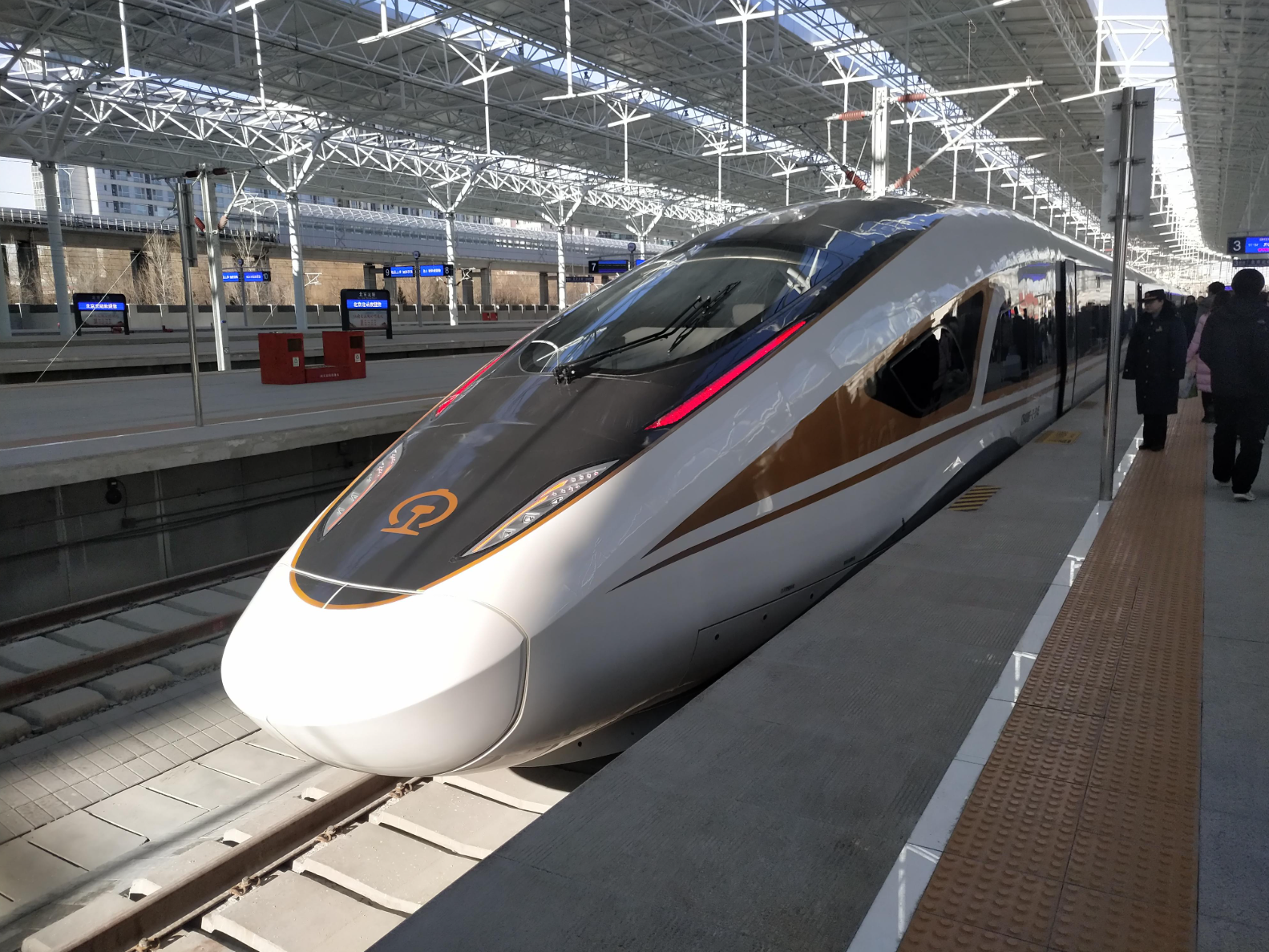
How to Take a High-Speed Train in China: A First-Timer’s Guide to 12306, Passport Tickets and Boarding

Foreign visitors can take China’s high-speed trains using a valid passport. The easiest official option is to create an account on China Railway’s 12306 platform, verify your passport details, choose a train, and pay for the ticket. Most mainland China journeys use electronic tickets, so you generally won’t need to collect a paper ticket. On travel day, bring the same original passport used to book and arrive at the correct railway station 45–60 minutes before departure.
If you’ve never traveled by train in China, the system can look intimidating at first—especially when the station is enormous and you don’t speak Chinese. But once you understand the sequence, it’s straightforward: book → verify your passport → enter the station → clear security → find your boarding gate → locate your carriage and seat.
China’s rail network connects many major visitor destinations, including Beijing, Shanghai, Xi’an, Chengdu, Hangzhou, and Guangzhou. For many journeys between cities, it can be easier than flying: railway stations often connect to urban metro lines, and there’s no airport-style check-in process.
Here’s the complete process, explained from a local Chinese travel perspective, in the order you’ll actually need it.
1. What Counts as a High-Speed Train in China?
For most first-time visitors, a second-class seat on a G-series train is the simplest place to start. Not every train in China is a high-speed service, so the letters in the train number matter.
| Train prefix | What it generally means | Best for |
|---|---|---|
| G | High-speed EMU service | Most intercity sightseeing routes |
| D | EMU service, which may include longer-distance or lower-speed routes | Certain city pairs and overnight or longer journeys |
| C | Intercity EMU service | Some short journeys between nearby cities |
| K, T, Z, etc. | Various conventional train services | Slower routes or travelers who want a traditional train experience |
If you’re going from Beijing to Xi’an or Shanghai to Hangzhou, start by looking at G-series departures. They generally offer reserved seating, air conditioning, and a comfortable ride.
The letter alone doesn’t tell you how long the journey will take. Compare the actual journey duration, station stops, and arrival time before choosing.
Second Class, First Class or Business Class?

Second Class (二等座) is usually all most tourists need. On many high-speed trains, the seats are arranged 3 + 2 across the aisle, with small fold-down tables and, depending on the train model, electrical outlets or USB charging.
First Class (一等座) commonly uses a 2 + 2 layout, with wider seats and more personal space. It’s worth considering if you’re traveling a long distance and have room in your budget.
Business Class (商务座) is much more spacious, and certain trains have seats that recline substantially along with extra onboard services. The price can be significantly higher.
My local recommendation: Choose Second Class for a typical two-to-four-hour trip. For a longer ride, compare the First Class fare before deciding whether the extra comfort is worth it. You don’t need Business Class simply because it’s your first time on a Chinese high-speed train.
2. Where Can Foreign Visitors Buy China Train Tickets?
The official booking channel is China Railway 12306. It has an English-language website that supports eligible foreign passports.
Official English website: https://www.12306.cn/en/index.html
There’s also an official Railway 12306 mobile app. If possible, create your account and complete identity verification before you arrive in China.
Option A: Book directly with 12306
With 12306 you can search travel dates, departure and arrival stations, train numbers, journey times, seat classes, fares, and available seats.
The main advantage is that you’re booking through the railway’s official platform, without an additional third-party booking service fee.
The registration and verification steps may feel unfamiliar to international users, and not every extra feature is necessarily available in English. But once your account is ready, it becomes easier to book multiple journeys.
Option B: Use a third-party booking service
Platforms such as Trip.com also sell Chinese train tickets and may offer a familiar English interface and additional international payment options.
They’re a reasonable alternative if you have problems registering or paying on 12306. However, check for booking fees and make sure your ticket has actually been issued. A request marked “processing” or “awaiting confirmation” is not the same as a confirmed train reservation.
I would try 12306 first and use a reputable booking service if necessary.
Option C: Buy tickets at the station
You can also visit a staffed railway ticket counter with your valid original passport.
The drawback is availability. During Chinese New Year, the May Day holiday, National Day, and other peak periods, popular trains may sell out before travel day.
Don’t rely on buying at the station if your itinerary is fixed.
3. How to Register for 12306 with a Foreign Passport
Your identity information must be verified before you can use 12306 normally. For passport holders, the system may complete verification online or require a clear photograph of the passport information page for review.
Step 1: Open the English 12306 site
Visit https://www.12306.cn/en/index.html and choose Register. Follow the current prompts to create your username and password and supply the contact details the system requests, such as an email address or mobile number.
Exact screens may change with platform updates.
Step 2: Enter your passport details exactly
Choose Passport as the identity-document type. Enter the name, nationality, passport number, and other requested details exactly as required by the form.
Use your real passport name, not a nickname or a made-up Chinese name. Double-check numbers and letters—0 (zero) and O (letter O) are easy to confuse.
If the form has specific rules for name order, spaces, or special characters, follow its instructions so the details can be checked against your document.
Step 3: Complete identity verification
Some travelers may be verified automatically. Others may be asked to upload a clear image of the passport’s personal-details page for manual review.
Make sure the information is readable and nothing important is obscured. If online verification continues to fail, take your original passport to a staffed ticket window at a Chinese railway station and ask for help with identity verification.
Don’t leave registration until a couple of hours before your train. Verification issues can take time to resolve.
Step 4: Add your traveling companions
If you’re booking for family or friends, add each person as a passenger with their own valid identity-document details.
Two adults traveling together must each have a ticket in their own name. Don’t put both tickets under one passport number. Families traveling with children should follow 12306’s current child-ticket rules.
Step 5: Check that the account can book
Once verification is complete, search for a train and check whether you can select the passenger and proceed toward payment.
If you see an identity-verification warning, resolve that issue rather than repeatedly creating new accounts with different versions of your name.
4. How to Book a China High-Speed Train Ticket on 12306
Let’s use Beijing to Xi’an as an example. Suppose you’ve spent a few days exploring Beijing and now want to see the Terracotta Army in Xi’an.
Step 1: Choose your departure and destination
On 12306, find From, To, and Date. Enter Beijing as your departure city and Xi’an as your destination, then search.
Here’s a crucial detail: a Chinese city can have several completely different railway stations.
| English station name | Chinese name |
|---|---|
| Beijing Railway Station | 北京站 |
| Beijing South | 北京南站 |
| Beijing West | 北京西站 |
| Xi’an Railway Station | 西安站 |
| Xi’an North | 西安北站 |
Many Beijing–Xi’an high-speed services run between Beijing West and Xi’an North, but you must check your specific booking.
A ticket departing from Beijing West is not valid for boarding at Beijing South. The station’s full name matters more than the city name alone.
Step 2: Compare actual train options
| Booking label | Meaning |
|---|---|
| Train Number | The service identifier, such as G followed by digits |
| Departure | Scheduled departure time |
| Arrival | Scheduled arrival time |
| Duration | Journey time |
| Second Class | Standard reserved seating |
| First Class | More spacious seating |
| Business Class | Premium seating on certain trains |
Choose based on departure station, arrival time, total journey duration, and fare—not just the fastest train.
A faster service arriving very late at night may be inconvenient if it’s your first evening in an unfamiliar city.
If Xi’an is your next stop, it also helps to decide how much time you’ll spend there. My separate guide to planning a two-, three-, or four-day Xi’an itinerary explains how to divide your days between the City Wall, museums, and the Terracotta Army.
Step 3: Select your seat class
Second Class is the best-value default for most visitors. If you are traveling with someone, look for any available seating preference or seat-selection option.
A preference for adjacent seats isn’t a guarantee, especially if few seats remain.
Step 4: Select the correct passengers
Choose the passengers already added to your account and check the names and passport numbers one more time.
The document details on the ticket should match the original passport you’ll carry. If your passport is about to be renewed, check how a document-number change would affect your booking before buying.
Step 5: Pay and check the final ticket status
Follow the payment choices displayed on the booking page. Depending on the platform, eligible Chinese or international bank cards and certain mobile payment methods may be available.
After paying, open your orders and confirm the ticket is issued/confirmed, not merely submitted or pending.
Save the train number, departure and arrival stations, departure date and time, carriage number, seat number, and order confirmation.
Step 6: Do you need to print a ticket?
Usually, no. Ordinary domestic high-speed rail services in mainland China use electronic tickets. Your original booking passport is normally the essential document for identity checks and station access.
Keep a screenshot of the confirmation to read your train and seat details, but don’t treat the screenshot as a replacement for your passport. Likewise, a printed itinerary sheet isn’t itself the boarding ticket.
5. How Far in Advance Can You Book Train Tickets?
China’s regular domestic railway ticket presale window is generally 15 days, including the travel date.
For example, a ticket for November 15 would normally enter the sale window around November 1. Exact sale-opening times may differ by station and service, so check 12306.
The busiest periods often include Chinese New Year, the May Day holiday, the National Day holiday, and popular summer travel dates.
What if the train is sold out?
First check other departures on the same day. Then consider a different time or another station in the same city—but make sure you understand where that station actually is.
If nothing suitable is available, you can consider 12306’s waitlist feature (候补购票), where supported. The system may attempt to fulfill your request if a suitable seat becomes available.
A waitlist request is not a ticket. Don’t build a tight connection to an international flight around an unfulfilled waitlist order.
6. How to Board a High-Speed Train in China: Step by Step

This is the part I’d save on your phone. Chinese high-speed railway stations often follow a more controlled boarding process than smaller European stations. You normally clear identity checks and security first, wait in the departure hall, and only go down to the platform when your train starts boarding.
Step 1: Arrive 45–60 minutes early
For your first journey, arrive at the correct station entrance at least 45–60 minutes before departure.
At major stations such as Beijing South, Shanghai Hongqiao, and Xi’an North—or on crowded holidays—consider 60–90 minutes.
“Arrive at the station” means you are physically at the railway station, not just leaving your hotel. Boarding gates close shortly before departure according to the station’s rules; don’t expect to board with five minutes remaining.
Step 2: Confirm the station and entrance
Look for the full station name outside the building. Remember that Xi’an Railway Station (西安站) and Xi’an North (西安北站) are different places.
If you’re using DiDi or a taxi, show the driver the complete Chinese station name. Larger stations may have more than one entrance or drop-off area; follow the open entrance signs and staff directions.
Step 3: Have your passport checked
At the real-name identity-verification area, station staff or machines check your travel document against the booking record.
If you’re using a foreign passport, a staffed/manual verification lane (人工通道 / 人工验证) is a reliable option, especially if the automatic barrier doesn’t recognize your passport.
Show the original passport and follow the staff member’s instructions. Some newer stations can read passports automatically, but don’t assume every gate can.
Your phone’s passport photograph isn’t a guaranteed substitute for the original document.
Step 4: Pass through security
Put your suitcase and backpack through the X-ray scanner, then follow instructions through the personal security screening area.
The process is somewhat similar to airport security, but railway rules aren’t identical to airline cabin-baggage rules. For example, don’t assume that the airline’s usual 100 ml rule applies to ordinary bottled water on a train.
Flammable items, dangerous goods, certain sprays, and alcohol-related products may be prohibited or restricted. Check the current 12306 list if you’re carrying anything unusual.
Step 5: Find your boarding gate in the waiting hall
After security, you’ll normally reach a departure lounge with seats, shops, toilets, water facilities, and electronic screens.
Check the screens for your train number, departure time, destination, boarding gate (检票口), and boarding status.
Follow the train number, not just the destination. Several trains may be going to the same city, each with a different departure time and gate.
Also, the boarding gate in the waiting hall isn’t necessarily the same thing as a platform number. Find the gate first; the signs will direct you to the platform after ticket checks.
Step 6: Wait until boarding opens

The screen may show 正在检票 (Boarding) or 停止检票 (Boarding Closed). Announcements may also be made over the loudspeakers.
When your train starts boarding, take your passport and follow the line toward the gate. Use the staffed lane if the self-service scanner doesn’t work for your document.
After passing the gate, follow the signs to the correct platform. Don’t board a train merely because one happens to be standing there; check the train number again.
Step 7: Find your carriage and seat
Your booking should show something like:
Train G87 · Carriage 06 · Seat 08F
This is only an example of how the information is formatted, not a claim about a particular train’s timetable.
- G87: Train number.
- 06: Carriage 6.
- 08F: Row 8, seat F.
Second Class commonly has a 3 + 2 arrangement. A and F are generally window seats; C and D are generally aisle seats; B is the middle seat.
Look for carriage-position signs on the platform floor or electronic displays, which may vary by train formation. Board the correct carriage and take your assigned seat.
Don’t assume an empty seat is available: another passenger may join at a later station.
Step 8: Store your luggage safely

Put smaller bags in the approved storage spaces and ordinary suitcases on suitable racks where they fit. Larger cases should go in the dedicated larger-luggage areas where provided.
Keep aisles, doors, and emergency exits clear. Keep your passport, wallet, phone, and other valuables with you.
Once you’ve found your seat and secured your luggage, you can relax.
7. Useful Things to Know Once You’re on the Train
Can you eat on a Chinese high-speed train?
Yes. Passengers generally bring ordinary food and drinks, and some trains sell meals and snacks onboard. The exact service depends on the train and route.
For a journey lasting four or five hours, I would bring a few snacks and drinking water. Avoid foods with very strong smells that might bother other passengers.
Is hot drinking water available?
Many high-speed trains provide hot-water dispensers. It’s common to see Chinese passengers carrying insulated flasks for tea or instant foods.
If you’d like to do the same, bring a heat-safe bottle and be careful: the water can be extremely hot, especially while the train is moving.
Are there toilets onboard?
Yes. Look for signs marked 卫生间 (Toilet / Restroom). Depending on the train, there may also be accessible toilets or baby-care facilities.
Can you charge your phone?
Many trains have electrical outlets or USB sockets, although availability and placement vary by model. Charge your phone before departure and bring an allowed power bank if you need one.
For portable lithium batteries, check the railway’s current carriage restrictions. The original guideline uses 100 Wh as the per-unit ceiling for standard power banks, but other labeling and hazardous-goods rules can apply.
Is there Wi-Fi or mobile internet?
Don’t assume reliable free Wi-Fi for the whole route. Mobile data coverage is generally useful but may weaken in tunnels or remote areas.
Save your destination’s hotel address and any essential travel information offline before leaving.
Does the train stop at other stations?
Often, yes. Many G- and D-series services make intermediate stops.
You don’t need to get off until your booked destination. Watch onboard displays and listen for announcements, and start gathering your belongings 15–20 minutes before arrival, especially if you have several bags.
8. What Happens When You Arrive?

When the train reaches your destination, take your luggage and follow the signs for 出站 (Exit).
You may also see 地铁 (Metro), 出租车 (Taxi), 网约车 (Ride-Hailing), and 公交车 (Bus).
Keep your original passport accessible. Some stations check your identity again when you leave the paid area. If an automatic exit gate can’t read your passport, ask for the manual inspection lane.
Arriving at Xi’an North Railway Station for the first time

Xi’an North is a major high-speed rail hub.
- For hotels near the Bell Tower or Yongning Gate, Metro Line 2 is often convenient.
- For the Giant Wild Goose Pagoda area, check Metro Line 4 and your hotel’s exact location.
- With large bags, follow the signs for the official taxi area or designated ride-hailing pickup point.
If you haven’t booked a hotel yet, read my guide to where to stay in Xi’an: Bell Tower, Yongning Gate or Giant Wild Goose Pagoda. It compares neighborhoods and explains airport and railway-station transfers in detail.
If you plan to visit the city’s biggest archaeological attraction after arriving, I’ve also written a practical guide to visiting the Terracotta Army from Xi’an, including passport tickets and transport.
9. How Much Luggage Can You Bring on China High-Speed Rail?
The usual free carry-on allowance for an adult passenger is 20 kg in total. For EMU/high-speed services, each item’s combined outside dimensions—length + width + height—generally must not exceed 130 cm, and each item must not weigh more than 20 kg.
That last point matters if you’re touring China for several weeks with a large suitcase. A suitcase accepted as checked baggage by an airline may not meet the railway’s normal onboard size allowance.
Before traveling, measure your bag and check the official railway baggage and restricted-items rules, particularly if you have an unusually large case.
What items are restricted?
Sharp weapons, flammable and explosive materials, and various hazardous substances are controlled. Some sprays, perfumes, alcohol products, and batteries may also be subject to quantity, size, or packaging restrictions.
Train security is not simply a copy of airport security. Check the current official list rather than assuming that anything allowed on an international flight is automatically acceptable on Chinese railways.
10. What If You Book the Wrong Train or Miss It?
This is something I’d understand before travel day, not after an unexpected delay.
Can you change the date or departure time?
Often, yes, subject to the railway’s change rules and available seats. Changes can be handled through 12306 or at eligible station ticket windows.
A normal ticket generally has one permitted change, and fees depend on when you change it and whether you move the trip to a later date.
Under the currently published ordinary domestic rules, changes made at least 48 hours before departure can normally be made without a change fee. Certain same-day or earlier-date changes are also fee-free. Moving to a later date close to departure can incur a 5% or 15% fee calculated according to the applicable fare, and changing to a future date after the original train has departed may incur 40%.
Any difference in ticket price is handled separately. Always read the specific conditions shown before confirming the change.
What if you miss your train?
Under the eligible ordinary domestic ticket rules, it may still be possible to change your ticket before midnight on the original departure date, provided there are seats available and your ticket qualifies.
That doesn’t mean a replacement train is guaranteed. A change to a later date after departure may carry a significant fee.
Don’t treat the change policy as a reason to arrive late.
Can you cancel and get a refund?
Ordinary domestic tickets can generally be refunded before the scheduled departure, subject to the fee scale below.
| Time remaining before departure | Standard refund fee |
|---|---|
| 8 days or more | 0% |
| 48 hours to less than 8 days | 5% |
| 24 to less than 48 hours | 10% |
| Less than 24 hours | 20% |
Some ticket categories, cross-border routes, and special situations follow different rules. A third-party booking platform may also have its own service charges.
A missed train isn’t automatically eligible for an ordinary refund. Changing a ticket and canceling a ticket are different processes.
What if 12306 says no tickets are available?
Try another departure on the same day, a different time, or another station in the same city. After that, look into the official waitlist option rather than trusting people on social media who guarantee scarce tickets through “special channels.”
11. Six Common Mistakes First-Time Train Travelers Make
Mistake 1: Confusing the city with the station. Beijing West isn’t Beijing South, and Xi’an North isn’t Xi’an Railway Station. Double-check the full station name.
Mistake 2: Leaving the original passport behind. An e-ticket doesn’t eliminate the need for the identity document used for the booking.
Mistake 3: Arriving only ten minutes before departure. Security, passport verification, and large station concourses take time. Aim for 45–60 minutes early, or more on holidays.
Mistake 4: Looking only at the destination. Always confirm the train number, departure time, boarding gate, carriage, and seat.
Mistake 5: Assuming a waitlist request is a confirmed ticket. You have a train reservation only after it has been fulfilled and the ticket is issued.
Mistake 6: Treating an order screenshot or itinerary printout as the travel document. Keep it for reference, but take the original passport used to book.
12. Useful Chinese Phrases at the Railway Station
Staff at large Chinese railway stations can usually direct you to the right place, but not everyone speaks fluent English. Save these Chinese phrases so you can simply show them on your phone.
| Show this Chinese to staff | English meaning |
|---|---|
| 请问检票口在哪里? | Where is the boarding gate? |
| 我是用护照买的票。 | I booked my ticket with my passport. |
| 请问人工通道在哪里? | Where is the manual identity-check lane? |
| 这是去西安的高铁吗? | Is this the high-speed train to Xi’an? |
| 请问6号车厢在哪里? | Where is carriage 6? |
| 我找不到我的座位。 | I can’t find my seat. |
| 我的火车已经开走了,可以改签吗? | I missed my train. Can I change my ticket? |
| 请问地铁入口在哪里? | Where is the metro entrance? |
I also recommend saving your train number, departure station in Chinese, destination station in Chinese, and hotel’s Chinese address.
The official railway customer-service number in China is 12306. The English website also lists +86 12306, but call availability and supported languages can vary by telephone provider and service.
13. China High-Speed Rail Checklist: The Night Before You Travel
| Check | What to confirm |
|---|---|
| Ticket | Issued, not on the waitlist |
| Date | Correct travel day |
| Station | Full departure-station name |
| Train | G-, D-, or other service number |
| Seat | Carriage and seat number saved |
| Passport | Original document used for booking |
| Getting there | Hotel-to-station route planned |
| Timing | 45–60 minutes early for your first trip |
| Luggage | Weight, measurements, and restricted items checked |
| Phone | Charged; ticket and destination saved |
If you’ve checked these things, taking your first high-speed train in China is much less complicated than it may appear.
Final Thoughts: Taking Your First High-Speed Train in China
China’s high-speed rail network is one of the most practical ways to explore different cities in a single trip. You might spend a few days among Beijing’s historic neighborhoods, take a train to Xi’an, and discover an entirely different side of Chinese history and food.
The essentials are simple: book using accurate passport details, complete any required 12306 verification, check the exact departure station, arrive early, and keep your original passport accessible.
You don’t need fluent Mandarin or expert knowledge of Chinese railway systems. Follow the sequence—train number, boarding gate, carriage, seat—and you’ll be ready for the next part of your journey.
And if that next stop is Xi’an, don’t leave without tasting its local specialties. My guide to 12 foods to try in Xi’an will help you decide what to eat after you check in.
Information reviewed in October 2026. Booking screens, train schedules, railway policies and station procedures may change. Check the official 12306 English website before travel. This guide focuses on ordinary domestic mainland China trains; cross-border routes can have different rules.



One Comment